Accountability is becoming harder to maintain in a world where expertise is diluted by easy access to information and AI tools — so organizations must create systems that operationalize accountability rather than rely on self-proclaimed experts.
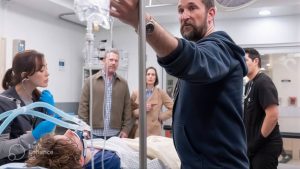
I was watching the show “The Pitt” the other day. The episode showed a protective mother questioning the lifesaving care the ER docs were administering to her son because of something that she read on the internet. Sound familiar? How often do we all do this exact same thing? I’m not talking about questioning doctors; I am talking about us thinking we are profound “experts” because of something we googled or got from our new friend, ChatGPT. This behavior is called the Dunning-Kruger effect where “people with limited knowledge or competence in a domain greatly overestimate their own knowledge or competence”. By the way, I am now an expert on Dunning-Kruger because I just got that definition from the internet!
The concerning part is that this happens all of the time, and there does not seem to be anyone or anything around to hold people like me and this mother accountable – or, for that matter, the doctor!
Hear me out on this before you start shaking your head. While Dr. Robby on “The Pitt” is arguably the best doctor since Marcus Welby (dating myself?), is it possible that this mother knew something more valuable about their son’s care? Probably not, but what if she did? She certainly has the right to question the doctor, doesn’t she? What if the “expert” was wrong? We know that experts can be wrong and the results of such missteps vary in severity from grave consequence to a learning opportunity. Or in the case of the “The Pitt” maybe just another captivating episode for next season.
The issue this episode raised to me – and something we are all dealing with – is the acceleration of a very important skill we have always had to possess in our lives. Holding someone accountable for the truth. I think it is acceptable to say that no one is actually “the expert” in anything. All they are is just “the most-informed person” available that “non-experts” have to decide whether or not to trust. The problem is that when everyone believes they are the expert, no one is accountable — that’s where real harm happens.
The real crisis isn’t the loss of expertise — it’s the loss of accountability that used to keep experts honest.
It has taken me 20 years to become “an expert” in my business, which is healthcare revenue cycle management. But every day I run into someone or something claiming that same title with far less depth or experience.
And I get it.
They can stake that claim because information is much easier to find, absorb, and turn into credible knowledge today than when I started in the business. Am I more of an expert because I am older and cut my teeth in the “weeds” or is that other person the expert because they sound smarter and can retain knowledge much better than me? I know, it depends on the situation, but we are getting to a stage with AI – or may already be there – that it is likely smarter than us both. If that is true, then why wouldn’t an upper-class, well-dressed, educated mother who survived childbirth twice, equipped with a paid ChatGPT subscription, think she is the expert in this life-saving situation with her child?
Yeah, I know that is crazy logic. Especially when using an extreme life-death example like this that truly requires deep expertise and knowledge.
But in other “simpler” professions, like mine that provides RCM software and services for medical practices, this is a daily occurrence. People are using AI to find information quickly and passing that along as expertise. Their daily work software (Word, Excel, Salesforce, the Electronic Medical Record system) is constantly being enhanced with RPA and AI to make their formerly complex work easier. And now we have LLM’s and NLM’s narrowing the variability of the information being passed onto them to make the far-less experienced into super users and experts.
I am not arguing that real expertise is dead. I am arguing that accountability is the missing ingredient that protects us from bad expertise — whether human or AI-generated.
If accountability is hard for individuals, it’s nearly impossible at scale inside complex business systems — unless it’s engineered into the process.
Accountability is not something we all enjoy so much. It involves being answerable for your actions rather than judging the actions of others, which can be hard when X or Facebook are your primary news feeds. It requires taking ownership of outcomes (good or bad) and having the obligation to explain or correct them. And It also means going beyond the baseline responsibility to complete the work, and instead actually doing the necessary follow-through like fixing mistakes or giving credit where it’s due.
Accountability requires humility which is not something highly rewarded in our fast-paced world.
Some professions have a high degree of accountability built into their daily operations. Anyone who has ever served in our great military knows exactly what I am talking about. And same goes for an ER. One of the things I love about watching Dr. Robby and “The Pitt” is how direct, accurate, and clear the communication is in their timely feedback to the junior clinicians in their teaching hospital. The teacher is always right and the learner is always appreciative for the feedback.
Near flawless accountability and humility in the workplace. Is that common in this profession, or just amazing screenplay writing? I wish it was common in mine.
I have found that it is very different in most businesses where workflows can be bypassed, goals can be adjusted, and blame can easily be deflected. When work is distributed among many people to deliver the final outcome, it often feels like everyone is responsible but no one is accountable.
As an RCM services provider to medical groups, I want to change that dynamic and make it far easier for the accountability to be measured and the feedback to be appreciated. Our hypothesis is that the feedback loop takes way too long to get to the accountable person who needs to change their behavior to improve their outcomes. And when it finally gets to them, they look for ways to blame someone else rather than having the courage to course correct.
Which brings me back once more to Dr. Robby and the mother. The show does a magnificent job exposing the frustration and mutual disrespect each party has for one another. Which I am sure happens often in that type of stressful setting. Engineering the accountability into that moment is worthless. Instead, the accountability has to be data captured, pattern-measured, validated, and presented at an opportune time and format when the “expert” is most open to learning from it.
The point is this: expertise will always be subjective, but accountability doesn’t have to be.
The question was never “Who is the expert?” It was always “Who is accountable?” And in a world where everyone has information, but few have responsibility, the real danger isn’t ignorance — it’s unchallenged certainty! At Connective Health, we’re working to rebuild that missing layer of accountability by grounding decisions in data, not ego, and by shortening the distance between action, consequence, and correction. When accountability becomes operational, not optional, the noise fades, the truth becomes visible, and results finally align with reality.